2011年2月27日星期日

China’s Internet: The Invisible Birdcage


This essay I wrote last year originally appeared in the September 2010 issue of the China Economic Quarterly. Some of the numbers may already be a bit dated but it is still relevant. The editor chose the title; all errors are my responsibility.
“China internet adds 12th website” – The Onion (July, 2009)
The Onion’s satirical headline reflects a common foreign perception – reinforced when Google pulled out of its China business in early 2010 – that China’s internet is a suffocated tool of the state. That idea is mistaken. Censorship of certain subjects is pervasive, but the internet in China is thriving: over 400m Chinese regularly go online, private-sector internet companies generate billions of dollars in annual revenue, and the 30 or so listed Chinese firms have a combined market capitalization approaching US$100 bn. Although the state’s grip is tightening, the vast majority of Chinese websites remain relatively free of state interference. The Onion ignores the fact that three of the top six global internet businesses are Chinese.
This vibrant social space has distinctive characteristics. The amazing popularity of online gaming – uniquely, in China, more lucrative than advertising – attests to netizens’ focus on entertainment. Instant messaging, online chat sites and bulletin boards, moreover, are far more widely used than email. But in other respects China’s netizens resemble their counterparts in the West. They read news, download music and watch movies (many of them pirated). Social networking sites are growing in popularity, and the popularity of Twitter-like microblogs exploded over the past year. Indeed, the internet has created an unprecedented space for civil discourse in China: netizens use bulletin boards, instant messaging (especially Tencent’s QQ service), social networking sites, blogs and microblogs to share information, gripe, expose corruption, and otherwise carry on a robust and growing online conversation.
Inevitably, the growing economic and social clout of the internet has made it a target of greater government regulation. Until 2007, the regulatory environment was actually rather lax, which created pace for nimble, private startups to dominate the emerging industry. But Beijing is beginning to assert its regulatory grip: the State Council published a white paper in June outlining detailed plans for governing the internet’s development, and the number of foreign social networking websites blocked by the “Great Firewall” grew over the past three years. The internet is now heavily regulated, although self-censorship remains the chief means of controlling content. Private players remain on top, but cashed-up state-owned media enterprises such as CCTV have aggressive expansion plans and hope to knock private competitors off their perch.
Game Theory
The Chinese internet’s revenue structure is quite different from that of the US and other Western countries, which are dominated by advertising. At over US$4 bn, China’s online gaming revenues are larger than those of the US. Tens of millions of Chinese online gamers play a wide variety of games, from solitary card games to multiplayer role-playing games and shoot ’em ups. The boom in online gaming has created several US-listed, billion-dollar companies, including Shanda Games, Giant Interactive, Perfect World, Changyou and Netease. Tencent, China’s largest internet company and the third largest internet company in the world by market capitalization, derives a large chunk of its profits from online gaming. When the industry started in 1999-2000, complex multiplayer games were all imported, but a series of government development programs helped domestic gaming companies to grab the lion’s share of revenues. Strict regulations explicitly protect domestic champions from competition, and foreign gaming firms cannot sell their products in China without a local Chinese partner. Beijing recently put in place export incentives for Chinese game firms, while reaffirming the restrictions on foreign games.
Crucially, online gaming is responsible for creating a viable online payments system in a country with very low credit-card penetration and almost no concept of recurring subscription charges. Most games offer at least a half dozen payment channels, including top-up cards, debit cards, credit cards and Paypal-type online payment services, notably Alibaba’s Alipay and Tencent’s Tenpay. Typically for the sector, the government allowed private companies to develop these services over several years before introducing a detailed regulatory regime, which will take effect from September 1. State-owned players are now eying the potentially lucrative online payments market, with China Mobile’s recent investment in Shanghai Pudong Development Bank widely viewed as a strategic investment to accelerate its mobile payments service.
The biggest winner from the growth of online payments is ecommerce, led by Alibaba Group’s business-to-business (B2B) service Alibaba.com and its consumer site Taobao. Ecommerce trade volume surpassed US$530 bn in 2009, according to official figures, and is on course to surpass the US within five years. Taobao, which destroyed eBay’s business on its way to becoming the country’s dominant internet retail platform, relies on advertisers for most of its income. According to official government statistics, advertisers spent US$3 bn online in 2009, and that figure is projected to grow over 30% per year. Compared, however, to the advertising market in China for television, newspapers and magazines – which measured US$88 bn in 2009, according to market research company Nielsen – the online ad market is still disproportionately small. China’s online advertising revenues are only around 15% of ad revenues in the US, and there is considerable potential for growth.
Digital Triumvirate
The success of homegrown internet names such as Taobao and Baidu at the expense of global giants like Ebay and Google is responsible for a popular misconception that foreigners are shut out of China’s foreign internet market. This may be true of wholly-owned foreign operating firms, but foreign investors have poured billions of dollars into Chinese internet firms. China’s big three – Tencent, Baidu and Alibaba – are entrepreneur-founded, foreign venture-capital-backed, overseas-listed firms. South African multimedia company Naspers owns approximately 35% of Tencent, while Yahoo and Japan’s Softbank own a majority of Alibaba Group. Google was a pre-IPO investor in Baidu before it exited with a handsome profit. Almost all of China’s major internet firms are classified as foreign-invested entities, which in theory means they are subject to the same restrictions as Yahoo, Google or any other foreign firm. Most foreign internet companies have failed in China because they were unable to compete effectively against very talented local competition, not because they were shut out of the market.
Over the past few years, however, Beijing’s decision to increase its controls over internet content hit a handful of high-profile foreign internet businesses targeting the Chinese market. The change occurred in 2008, possibly triggered by Beijing’s paranoid preparations for the Olympics and unfavorable foreign coverage of the riots in Tibet, when websites such as Facebook and Youtube were first blocked. Since then, the government has taken a much more aggressive regulatory role, declaring certain sectors like online video off limits to new investment by non-state-owned entrants, and launching a proactive campaign to guide public opinion online. June’s white paper states that the internet must serve the interests of both the economy and the state.
So far, private domestic players have not suffered. But with the Party-state’s propaganda machine and billions of dollars at stake, government media outlets are beefing up their online presence. CCTV, the state-owned television broadcaster, has launched an online TV service that may eventually threaten the more established online video sites like Youku and Tudou, which have tens of millions of viewers every month. People’s Daily, the Party-controlled newspaper, recently restructured its online division into a new company, which is planning to list on the Shanghai stock exchange before the end of 2010. People’s Daily Online has also launched a search engine – Goso.cn – that aspires to compete with the likes of Baidu. Nine other state-owned media firms have been approved to list their online arms on the Chinese stock market.
Whether these state media enterprises can attract a critical mass of users is uncertain, but China’s propagandists are determined to give state-run media outlets a greater role in shaping online debate. Writing in the Party journal Seeking Truth in December 2009, Meng Jianzhu, the Minister of Public Security, wrote: “The internet has become a primary method for the anti-China forces to infiltrate us and amplify destructive energy. This provides new challenges in maintaining state security and social stability.” Censorship of foreign content has shifted from news sites to Web 2.0 services with superior communication and organizing functions, such as Twitter and Facebook, which the government accuses of becoming a rallying point for dissidents and separatists. A report on new media published by the Chinese Academy of Social Sciences in July bluntly states:“Foreign social networking sites have become a tool for political subversion used by Western nations.”
Control 2.0
Tech-savvy netizens can easily sidestep the Great Firewall with VPNs, proxy servers and other special software. But most of China’s 400m plus internet users stay within filtered Chinese sites, partly for cultural and linguistic reasons, but also because circumventing the government’s controls is simply inconvenient. Chinese internet companies are forced to sign government-mandated “self discipline” pledges, and large firms employ dozens or hundreds of censors who monitor content and remove anything of concern. Failure to comply leads to warnings, fines, shutdowns or worse. The government provides guidance on restricted topics but has structured enough ambiguity into the system so that company censors frequently overcompensate in their efforts to comply. The rise of social networking sites – especially Twitter-like microblogs such as Sina’s Weibo, which has an estimated 20m users [approximately 100m at the time of this blog posting] – have dramatically increased the filtering tasks. Sina’s chief editor complains that policing Sina’s microblogs is “a very big headache.”
Rebecca MacKinnon, an expert on Chinese internet censorship, calls the government’s approach to information control “networked authoritarianism.” By allowing citizens enough freedom to draw attention to social problems or injustices, she argues, they become less likely to join a movement calling for radical political change. “In many ways,” McKinnon explains, “the regime actually uses the internet not only to extend its control but also to enhance its legitimacy.” Aside from being a societal pressure valve, the internet is a useful means for the central government to supervise wayward local officials. Indeed, June’s white paper explicitly states that the government “attaches great importance to the internet’s role in supervision.”
Beijing, in other words, has a political interest in keeping China’s internet commercially healthy. Observers who predicted a decade or more ago that China’s political and economic structures were unsustainable and the country would imminently “crash” were wrong. And contemporary analysts who believe that the relatively closed nature of China’s internet will lead to the downfall of the Party-state will likely be proved wrong, too. Chen Yun, a Party elder who spent much of his career overseeing the economy, advocated the idea of a “birdcage economy” for China. The cage was the state economic plan, within which free markets – the birds – could move freely. China’s approach to managing the internet is similar: the government has built a gilded cage around the internet that will prove far more robust than its critics expect.

Bernanke Blames the Global Financial Crisis on China


They must put something in the water at the Fed, certainly the Board of Governors and the New York Fed. Everyone there, or at least pretty much everyone who gets presented to the media, seems to have an advanced form of mental illness, namely, an pronounced inability to admit error. While many in public life suffer from this particular affliction, it appears pervasive at the Fed. Examples abound including an overt ones like an article attempting to bolster the party line that no one, and hence certainly not the central bank, could have seen the housing bubble coming, or subtler ones, like a long paper on the shadow banking system that I did not bother to shred because doing it right would have tried reader patience Among other things, it endeavored to present the shadow banking system as virtuous (a necessary position since the Fed bailed it out) because it was all tied to securtization and hence credit intermediation. That framing conveniently omits the role of credit default swaps and how they multiplied the worst credit risks well beyond real economy exposure levels and concentrated them in highly geared financial firms.
Another example of the “it is never the Fed’s fault” disease reared its ugly head in the context of the G20 meetings. The big row is over global imbalances with the US mad at China for not doing enough to rebalance its economy (code for consume more, export less). China is admittedly trying to take the barmy position that its huge reserves really don’t count (huh?) so I suppose the Fed thinks it can trot out some whoppers of its own.
Actually, this is an old whopper, since the Fed has maintained for some time that the “savings glut,” meaning emerging markets and in particular China saving too much, had a lot to do with the crisis. From the Financial Times:
Foreign investors’ hunger for safe US assets helped to cause the 2007-2009 crisis by encouraging banks to turn risky mortgages into AAA rated bonds, Ben Bernanke, US Federal Reserve chairman, argued in Paris on Friday.
“The preference by so many investors for perceived safety created strong incentives for US financial engineers to develop investment products that ‘transformed’ risky loans into highly rated securities,” said Mr Bernanke, presenting a new research paper that he co-wrote with other Fed economists.
Mr Bernanke has previously argued that a “global savings glut” led emerging markets to send large amounts of capital to the US in the 2000s, pushing down US interest rates. His new paper says that those emerging markets wanted safe assets – and US regulators failed to keep the financial system from creating them.
“In analogy to the Asian crisis, the primary cause of the breakdown was the poor performance of the financial system and financial regulation in the country receiving the capital inflows, not the inflows themselves,” Mr Bernanke said, adding that the US crisis had given him new sympathy for developing countries that have to manage large capital inflows.
This argument supports Mr Bernanke’s view that low Fed interest rates did not make an important contribution to the financial crisis and the main errors were in regulation.
According to the paper, more than 75 per cent of investment from “savings glut” countries was in AAA rated US assets in 2007, whereas such assets accounted for only 36 per cent of total US securities.
Help me. If this really passes for analysis at the Fed, as opposed to a mere cynical effort to create a talking point, no wonder we had a global crisis.
First, correlation is not causation.
Second, how material was that 75% in terms of the total market for AAA securities of all types?
Third and most important, the savings glut countries liked Treasuries and Agencies. They did not buy the AAA securities that were at the heart of the crisis, namely AAA rated CDOs (far and away the most important driver of the toxic phase which turned a mere housing bubble into a global financial crisis) or AAA RMBS. Without a convincing explanation of a transmission channel between for Treasuries and Agencies, and the seeming free lunch of higher yield AAA paper that these foreign buyers for the most part shunned, this story remains unconvincing. And notice the Fed has been telling the global savings glut story for nearly three years now and still has not found a way to make a causal connection.
In addition, as we’ve pointed out repeatedly, when the Fed started increasing interest rates, demand for prime mortgages fell yet demand for subprime was supercharged. That is an unheard of pattern. When the Fed tightens rates, the outcome usually is for spread of risky credits to rise first and most and safer borrowers to rise less. Unless you can explain this deviation, you have again failed to explain the crisis, and this savings glut twattle does not cut it.
We debunked this thesis in ECONNED:
Now let’s take this one step further: where did the lending boom come from, exactly? As you may recall from the last chapter, the Fed and Treasury would have us believe that the “savings glut,” a.k.a., the Chinese, was the culprit. And the Chinese, along with other central banks in trade surplus countries, did play a role in this drama, through their continued appetite for AAA securities, along with others predisposed toward AAA paper (recall that starting in 2001, foreign central banks became the major actors in buying U.S. Treasury and agency paper).
The average global savings rate over the last 24 years has been 23%. It rose in 2004 to 24.9%. and fell to 23% the following year. It seems a bit of a stretch to call a one-year blip a “global savings glut,” but that view has a following. Similarly, if you look at the level of global savings and try deduce from it the level of worldwide securities issuance in 2006, the two are difficult to reconcile, again suggesting that the explanation does not lie in the level of savings per se, but in changes within securities markets.
At the same time, other data do lend support to the notion that the shadow banking system was the main culprit in the meltdown. Bank lending has contracted far less than its murky twin. Although global corporate lending did fall from its peak of $2 trillion in 2007 to $1.5 trillion in 2008, that level was on par with 2006. Between the second and third quarter of 2008, U.S. bank credit increased 1%, and between the third and fourth quarter, banking industry consultants Oliver Wyman estimated that it contracted by 0.5%.
By contrast, while $1.8 trillion of asset-backed bonds were issued in 2006, only $200 billion were floated in 2008, and issuance through mid-2009 was “minimal.” Similarly, Credit Suisse pegs the contraction in “shadow money” in private debt securities since 2007 at $3.6 trillion, or 38%, due primarily to the substantial increase in repo haircuts, plus a dearth of new issues and a fall in prices.
But of course, the Fed has to continue to assert that its super low rates really have no distorting effect on the wider world. The learned blindness is truly astonishing. Anyone with an operating brain cell can see that the object of Fed policy is to blow a new asset bubble to create a wealth effect to stimulate demand (or more accurately to prop up asset prices, and since the Fed has said it does not believe in asset bubbles, it won’t recognize it has created one till after the fact). And as we have also said repeatedly, the Japanese demonstrated in the late 1980s when they explicitly tried to create a bubble to stimulate domestic spending, that the end result is a financial crisis and a bad economic hangover.
So it does not take much in the way of imagination to see that goosing assets prices in thing you’d like to stabilize, like US housing and stocks, is going to leak into all sorts of other markets, like commodities. But the Fed is insistent on dodging responsibility for its past mistakes as well as its current actions.

2011年2月26日星期六

What Gives Gold that Mellow Glow?


In discussions of special relativity, you occasionally encounter a claim like, “The effects of special relativity only matter to particle physicists and others working with extreme energies and velocities. Relativity has no consequences in everyday life.” Well, these days, anybody who relies upon the Global Positioning System (GPS) to navigate their car or the airliner in which they're travelling uses both special and general relativity, because without correction for their effects, GPS would be so inaccurate as to be useless. But GPS is a recent innovation, and the relativistic corrections are both complicated and hidden from the user in the software in the receiver and on board the satellites. But there's an effect of special relativity which was observed, if not understood, by the ancients: the yellow gleam of gold.
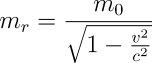
With an atomic number of 79, gold is in the last row of the periodic table containing stable elements, and only four stable elements (mercury, thallium, lead, and bismuth) have greater atomic number. With 79 protons in its nucleus, the electrons of the gold atom are subjected to an intense electrostatic attraction. Using the naïve Bohr “solar system” model of the atom for the moment, electrons in the 1s orbital, closest to the nucleus, would have to orbit with a velocity v of 1.6×10⁸ metres per second to have sufficient kinetic energy to avoid “falling into” the nucleus. This is more than half the speed of light: c≈3×10⁸ m/s, which, according to Einstein's equation:
m_r=\frac{m_0}{\sqrt{1-\frac{v^2}{c^2}}}
increases the electron's mass (or, in more modern terminology, momentum) by about 20%. Quantum mechanics replaces the Bohr orbits with a probability distribution of the electron's position, with the Bohr orbit radius interpreted as the distance from the nucleus where the peak probability occurs. The relativistic increase in mass of the electron causes a relativistic contraction of its orbit because, as the electron's mass increases, the radius of an orbit with constant angular momentum shrinks proportionately.
From the Bohr model, you might expect this effect to be significant only for the innermost electrons, but due to quantum mechanics, it strongly affects electrons in s orbitals even in outer shells, because their probability density remains high near the nucleus. The higher angular momentum pdf, and g orbitals have their probability peaks farther from the nucleus, and hence are less affected by relativistic contraction.
The colour of metals such as silver and gold is mainly due to absorption of light when a d electron jumps to an s orbital. For silver, the 4d→5s transition has an energy Einstein Medal by Jean Ramseier, issued by Huguenin Medailleurs of Switzerland in 1955corresponding to ultraviolet light, so frequencies in the visible band are not absorbed. With all visible frequencies reflected equally, silver has no colour of its own; it's silvery. In gold, however, relativistic contraction of the s orbitals causes their energy levels to shift closer to those of the d orbitals (which are less affected by relativity). This, in turn, shifts the light absorption (primarily due to the 5d→6s transition) from the ultraviolet down into the lower energy and frequency blue visual range. A substance which absorbs blue light will reflect the rest of the spectrum: the reds and greens which, combined, result in the yellowish hue we call golden.

Warmly glowing gold, 
What gives it that autumn hue? 
Relativity.
Special relativity is also responsible for gold's resistance to tarnishing and other chemical reactions. Chemistry is mostly concerned with the electrons in the outermost orbitals. With a single 6s electron, you might expect gold to be highly reactive; after all, cæsium has the same 6s1 outer shell, and it is the most alkaline of natural elements: it explodes if dropped in water, and even reacts with ice. Gold's 6s orbital, however, is relativistically contracted toward the nucleus, and its electron has a high probability to be among the electrons of the filled inner shells. This, along with the stronger electrostatic attraction of the 79 protons in the nucleus, reduce the “atomic radius” of gold to 135 picometres compared to 260 picometres for cæsium with its 55 protons and electrons—the gold atom is almost 50% heavier, yet only a little over half the size of cæsium. Only the most reactive substances can tug gold's 6s1 electron out from where it's hiding among the others, and hence not only the colour of gold, but its immunity from tarnishing and corrosion are consequences of special relativity. 

What keeps that golden
twinkle bright?
Mass increase near 
speed of light!
by John Walker
March, 2006 

Relativity Powers Your Car Battery


Relativity Powers Your Car Battery

Einstein drawing on car

No escaping Einstein. Car batteries would have far lower voltage if not for the relativistic affects in the lead atom, according to simulations.
You don't need a near-light-speed spaceship to see the effects of relativity--they can arise even in a slow-moving automobile. The lead-acid battery that starts most car engines gets about 80 percent of its voltage from relativity, according to theoretical work in the 7 January Physical Review Letters. The relativistic effect comes from fast-moving electrons in the lead atom. The computer simulations also explain why tin-acid batteries don't work, despite apparent similarities between tin and lead.
Electrons typically orbit their atoms at speeds much less than the speed of light, so relativistic effects can largely be ignored when describing atomic properties. But notable exceptions include the heaviest elements in the periodic table. Their electrons must orbit at near light speed to counter the strong attraction of their large nuclei. According to relativity, these high-energy electrons act in some ways as though they have greater mass, so their orbitals must shrink in size compared with slower electrons to maintain the same angular momentum. This contraction, which is most pronounced in the spherically-symmetric s-orbitals of heavy elements, explains why gold has a yellowish hue and why mercury is liquid at room temperature [1].
Previous work has studied the relativistic effects on lead's crystal structure, but little research has been done on this heavy element's chemical properties. So Rajeev Ahuja of Uppsala University in Sweden and his colleagues decided to study the most ubiquitous form of lead chemistry: the lead-acid battery. This 150-year-old technology is based on cells consisting of two plates--made of lead and lead dioxide (PbO2)--immersed in sulfuric acid (H2SO4). The lead releases electrons to become lead sulfate (PbSO4), while the lead dioxide gains electrons and also becomes lead sulfate. The combination of these two reactions results in a voltage difference of 2.1 volts between the two plates.
Although theoretical models of the lead-acid battery already exist, Ahuja and his collaborators are the first to derive one from fundamental physics principles. To find the cell's voltage, the team calculated the energy difference between the electron configurations of the reactants and the products. As with textbook physics problems involving balls rolling down hills, there was no need to simulate the details of intermediate states, as long as the initial and final energies could be calculated.
"The really difficult part is simulating the sulfuric acid electrolyte," says team member Pekka Pyykkö of the University of Helsinki. To avoid it, the researchers imagined that the reaction started not with the acid, but with the creation of the acid from SO3, which is easier to simulate. At the end they subtracted the energy for the acid creation (known from previous measurements) from the total. By switching relativistic parts of the models "on" and "off" the team found that relativity accounts for 1.7 volts of a single cell, which means that about 10 of the 12 volts in a car battery come from relativistic effects.
Without relativity, the authors argue, lead would act more like tin, which is just above it in the periodic table and which has the same number of electrons (four) in its outermost s- and p-orbitals. But tin's nucleus has only 50 protons, compared with lead's 82, so the relativistic contraction of tin's outermost s-orbital is much less. Additional simulations showed that a hypothetical tin-acid battery would produce insufficient voltage to be practical, because tin dioxide does not attract electrons strongly enough. Tin's comparatively loose s-orbital does not provide as deep an energy well for electrons as lead does, the team found. In the past, researchers only had a qualitative understanding of why tin-acid batteries never worked out.
Ram Seshadri of the University of California, Santa Barbara, says that relativistic effects were expected, but he had no idea that they would be so dominant. "On the scope of the work, the ability to reliably simulate so complex a device as a lead-acid battery from (almost) first-principles, including all relativistic effects, is a triumph of modeling," Seshadri says.
--Michael Schirber
Michael Schirber is a freelance science writer in Lyon, France.


References:

[1] P. Pyykkö, "Relativistic Quantum Chemistry," Adv. Quantum Chem. 11, 353 (1978). For less technical explanations, see the additional information links below.

The Controversy between Preformation And Epigenesis

Both the preformationist and epigenesist views can be traced back to ancient Greece. The debate between these two points of view reached the climax in the seventeenth and eighteenth centuries. The debate is about whether there is a typical point when life begins or life occurs gradually during the process of development (Maienschein, 2003, Intro). It seems that the epigenesist view has won this debate. However, with the more and more in-depth study in genetics, the debate is far from dead: the genetic inheritance or the environmental impacts, which matters more? Such a debate is different from the previous ones. Also, it has implication in newly-emerged biotech research, for example, the stem cell research. 

The development of biology like modern genetics and biochemistry in the 20th and 21st centuries has brought new concepts to preformationism and epigenesis. The core question of the preformationism/epigenesis debate is whether the individual organism is formed at the very beginning or it forms gradually. Biologists before the 20th centuries over this debate mainly focused on the embryology. Nowadays, the debate is on the scope of gene or genome. In 1910, Morgan’s study in drosophila’s mutation proved that indeed some inherited factors, saying genes, determined the development of organism. The new preformationism came up: genes, “carrying the information necessary to construct an individual”, program the development of organism and environmental impacts have limited influence (Maienschein, 2008). Further genetics studies, for example, Beadle and Tatum’s work on mutants of Neurospora, provided more and more support for this theory. Those studies, especially Francis Crick’s “central dogma” in 1957, made the new preformationist view popular and dominant (Keller, 2000, Ch.2). However, studies in gene regulation and cell differentiation showed that developmental process is not strictly preprogrammed by gene and environmental impacts are of great significance, and such a view is the new epigenesist. Robert Briggs and Thomas King cloned frogs in the 1950s showed cells from early developmental stage could be de-programmed. By the end of 20th century, the adult somatic cell cloning and the stem cell research strongly supported of the new epigenesist view and challenged the prevailing preformationism (Maienschein, 2008). 

The preformationism and epigenesis debate is much more moderate than before. Nowadays debate is about quantity–the genetic inheritance or the environmental impacts, which matters more–while the old debates were about quality—either preformationism or epigenesist. Today, no biologists deny that gene to some degree determines the development nor ignore the environmental regulation of gene expression. On the contrary, they argue which matters more. Some studies, like studies of “Junk DNA” show gene regulates the gene expression itself while others show environmental triggers are crucial in the expression. As study going on, we are likely to get an intermediate view of organism development. “The nowadays of the 21st century may take us back to some of the understanding and insights of the early 20th, a time when a balance of epigenesis and preformationism seemed likely, a time for a bit of predeterminism and a bit of cellular free will” (Maienschein, 2008). 

In a broad sense, the central point in some government policy and public debates over science issues, like cloning and stem cell research, is the preformationist and epigenesist debate. Unlike the pure academic debate, the concepts of preformationism and epigenesis are simplified and such a debate pays more attention on when life begins. For example, in the human embryonic stem cell research debate, the main dispute is about whether an embryo should be considered as a life. Preformationists in this debate think that doing such research equals to murder, thus, oppose it while the proponents hold the epigenesist view that life does not begin at fertilization. Such debate is much more from the ethical view than from the biological science view. Also, although such a debate among biologists is quite moderate, those public debates are very intense and the two points of are quite conflicting (Maienschein, 2003, Intro, Ch.7). 

In conclusion, though nowadays, preformationist and epigenesist debate still exists, it is quite different from it before. The concepts of preformationism and epigenesis have changed. Also, the debate is not only within the biological academic field, but also came into the public and is more about ethical problem. While more and more scientific evidence keeps mildening and neutralizing the preformationist and epigenesist debate, such debate still remains fierce in the public. 

Reference: 
Maienschein, Jane, "Epigenesis and Preformationism", The Stanford Encyclopedia of Philosophy (Fall 2008 Edition), Edward N. Zalta (ed.), URL = <http://plato.stanford.edu/archives/fall2008/entries/epigenesis/>. 
Maienschein, Jane, “Whose View of Live”, Havard University Press, 2003 
Keller, E Fox, “The Century of the Gene”, Havard University Press, 2000 

Time Travel without Regrets


Time travel is not ruled out by general relativity, but it might well create problems for the laws of common sense. In the 28 JanuaryPhysical Review Letters, a team proposes a new way of deciding the possibility or impossibility of quantum states that travel forward and backward in time. The new criterion automatically disallows quantum versions of the "grandfather paradox," in which a person travels back in time and kills her ancestor, thereby ensuring her own demise. The team also performed an experiment that illustrates the paradox-nullifying mechanism.
General relativity, Einstein's theory of space and time, allows the existence of closed timelike curves (CTCs)--paths that go forward in time, then back again to reconnect and form closed loops. Although it's unclear whether CTCs can be created, physicists have nevertheless explored their possible consequences, including their influence on quantum mechanics.
An ordinary quantum event might involve two particles moving forward in time, changing each other by interacting at some time, then going their separate ways into the future. However, if one outgoing particle enters a CTC, it can double back and become one of the ingoing particles--thus influencing its own transformation. In 1991, Oxford University physicist David Deutsch proposed a consistency condition to avoid time-travel paradoxes: a particle that loops back in time in this way should be in the same quantum state when in reappears in the immediate past of the interaction as it was when it departed the interaction for the immediate future [1].
To see how this condition works, imagine a quantum particle having states labeled 0 and 1. It travels around a CTC and, on its return, interacts with an "external" particle in such a way that 0 becomes 1 and 1 becomes 0. Such a particle presents a quantum grandfather paradox: when it comes back around the loop, it flips its former self to the opposite state. However, Deutsch showed that consistency is possible if the particle is in a superposition--a state that is equal parts 0 and 1. The interaction exchanges the 0 and the 1, but the state overall remains unchanged. For this to work, the external particle must also be in a superposition that flips back and forth.
The paradox is avoided, but a difficulty arises if the external particle is measured. Then it cannot remain in a superposition but must become definitely either 0 or 1--which means that the CTC particle cannot remain in a superposition, either. To preserve consistency, Deutsch argued that the CTC particle must exist in two parallel universes--the "1-universe" and the "0-universe"--and continually switch between them, so that no contradiction occurs in either one.
Lorenzo Maccone, of the Massachusetts Institute of Technology and the University of Pavia, Italy, and his colleagues propose a more stringent condition that avoids these difficulties. They require that any measurement of the particle going into the future should yield the same result as measuring it when it returns from the past. So any state that would alter the past when it came around again is disallowed, and no grandfather-type paradoxes can arise.
Perhaps surprisingly, "we can still have CTCs even with this strong condition," Maccone says. Only states that avoid paradoxes after the interaction are able to exist beforehand, so the team calls their condition "post-selection."
To demonstrate these ideas, the team performed an experiment with photons showing that the consistency condition indeed picks out specific states and destroys all the rest. Lacking an actual CTC to perform the post-selection, the team created photons in a specific quantum state for the input, a state where the polarization was not known or measured but had a correlation with another property, associated with the photon's path. As the photon went through the experiment, it experienced changes that mimicked the 0-to-1 flipping that occurs in the imagined time-travel arrangement. The team found that only those photons that wouldn't lead to paradoxes made it through unscathed. Although the result is in line with expectation, no one has simulated time travel in this way before.
An odd consequence of post-selection is that because the presence of a CTC annuls paradoxical states completely, it can disallow some states that seem innocuous today but have unacceptable consequences later. "In principle, one could detect the future existence of time machines by ... looking for deviations now from the predictions of quantum mechanics," says Todd Brun of the University of Southern California in Los Angeles. Although, he adds, it's hard to know in advance what to measure.
--David Lindley
David Lindley is a freelance writer in Alexandria, Virginia, and author of Uncertainty: Einstein, Heisenberg, Bohr and the Struggle for the Soul of Science (Doubleday, 2007). 


References:

[1] D. Deutsch, "Quantum Mechanics near Closed Timelike Lines," Phys. Rev. D 44, 3197 (1991).

2011年2月24日星期四

Hoping for a big day

I am not worry about the work
Think of something as you pleased
Ohoh
it's okay if I drink a cup of tea 
it's okay if I write a letter
it's okay if I do nothing
I'm busy and again I think of you
close or not as you ever do
been angry without mark
Ohoh
Suddenly I want to embrace you
ask you about the luck of your left hand
but only in imagination
honeyhoney
I'll say sorry to you 
I can't always sey sometime aside to accompany you
honeyhoney
Do you want to be close 
or fond of the distance 
Although the space remained ,meetings are missed
our hearts are tightly tied
When I need your embrace 
I always hope you're here
La...
I'm busy and again I think of you
close or not as you ever do
been angry without mark
Ohoh
Suddenly I want to embrace you
ask you about the luck of your left hand
but only in imagination
honeyhoney
I'll say sorry to you 
I can't always sey sometime aside to accompany you
honeyhoney
Do you want to be close 
or fond of the distance 
honeyhoney
Do you want to be close 
or fond of the distance 
Although the space remained ,meetings are missed
our hearts are tightly tied
When I need your embrace 
I always hope you're here
go on expecting big days
go on busying working
Leaving it in the care of the next holiday
Ohoh
Always blue is the sky
Always happy am I
Knowing I'm inside your heart

I didn't turn
The most cruel moment
See you walk quietly
Nothing like I
Originally a man becomes tender
Is thoroughly understood the height of
Love is the flow of
Not from person of
Why excited to reason
Believe that you are only afraid of hurting me
Not cheat me
Very loved who would be willing to part with or use
My dream shake
Announced that happiness will not come
With smile to forgive bitterness
Also over the
Have yesterday's still good
But tomorrow is yourself
Beginning to understand
Happiness is a choice

2011年2月3日星期四

See how much I love you


My grandparents were married for over half a century, and played their own special game from the time they had met each other. The goal of their game was to write the word "shmily" in a surprise place for the other to find. They took turns leaving "shmily" around the house, and as soon as one of them discovered it, it was their turn to hide it once more. They dragged "shmily" with their fingers through the sugar and flour containers to await whoever was preparing the next meal. They smeared it in the dew on the windows overlooking the patio where my grandma always fed us warm, homemade pudding with blue food coloring. "Shmily" was written in the steam left on the mirror after a hot shower, where it would reappear bath after bath. At one point, my grandmother even unrolled an entire roll of toilet paper to leave "shmily" on the very last sheet. 

There was no end to the places "shmily" would pop up. Little notes with "shmily" scribbled hurriedly were found on dashboards and car seats, or taped to steering wheels. The notes were stuffed inside shoes and left under pillows. "Shmily" was written in the dust upon the mantel and traced in the ashes of the fireplace. 

This mysterious word was as much a part of my grandparents' house as the furniture. It took me a long time before I was able to fully appreciate my grand-parents' game. Skepticism has kept me from believing in true love-one that is pure and enduring. However, I never doubted my grandparents' relationship. They had love down pat.It was more than their flirtatious little games; it was a way of life. Their relationship was based on a devotion and passionate affection which not everyone is lucky to experience. Grandma and Grandpa hold hands every chance they could. They stole kisses as they bumped into each other in their tiny kicthen

They finished each other's sentences and shared the daily crossword puzzle and word jumble.. 
My grandma whispered to me about how cute my grandpa was, how handsome and old he had grown to be. She claimed that she really knew "how to pick 'em." 

Before every meal they bowed their heads and gave thanks, marveling at their blessings: a wonderful family, good fortune, and each other.But there was a dark cloud in my grandparents' life: my grandmother had breast cancer. The disease had first appeared ten years earlier. As always, Grandpa was with her every step of the way. He comforted her in their yellow room, painted that way so that she could always be surrounded by sunshine, even when she was too sick to go outside. Now the cancer was again attacking her body. 
With the help of a cane and my grandfather's steady hand, they went to church every morning. But my grandmother grew steadily weaker until, finally, she could not leave the house anymore. For a while, Grandpa would go to church alone, praying to God to watch over his wife. 

Then one day, what we all dreaded finally happened. Grandma was gone. "Shmily." It was scrawled in yellow on the pink ribbons of my grandmother's funeral bouquet. As the crowd thinned and the last mourners turned to leave, my aunts, uncles, cousins and other family members came forward and gathered around Grandma one last time. Grandpa stepped up to my grandmother's casket and, taking a shaky breath, he began to sing to her. Through his tears and grief, the song came, a deep and throaty lullaby. Shaking with my own sorrow, I will never forget that moment. For I knew that, although I couldn't begin to fathom the depth of their love, I had been privileged to witness its unmatched beauty. 

S-h-m-i-l-y: See How Much I Love You.